
For importers, wholesalers and retailers, choosing the right HDPE folding table involves more than comparing price, size and container quantity. The product must also meet the confirmed specification, operate safely, remain stable in use and arrive with suitable export packaging.
A clear inspection checklist helps buyers reduce misunderstandings before shipment and makes it easier to compare different table configurations objectively.
This guide explains the main points that should be checked when inspecting an HDPE folding table order.
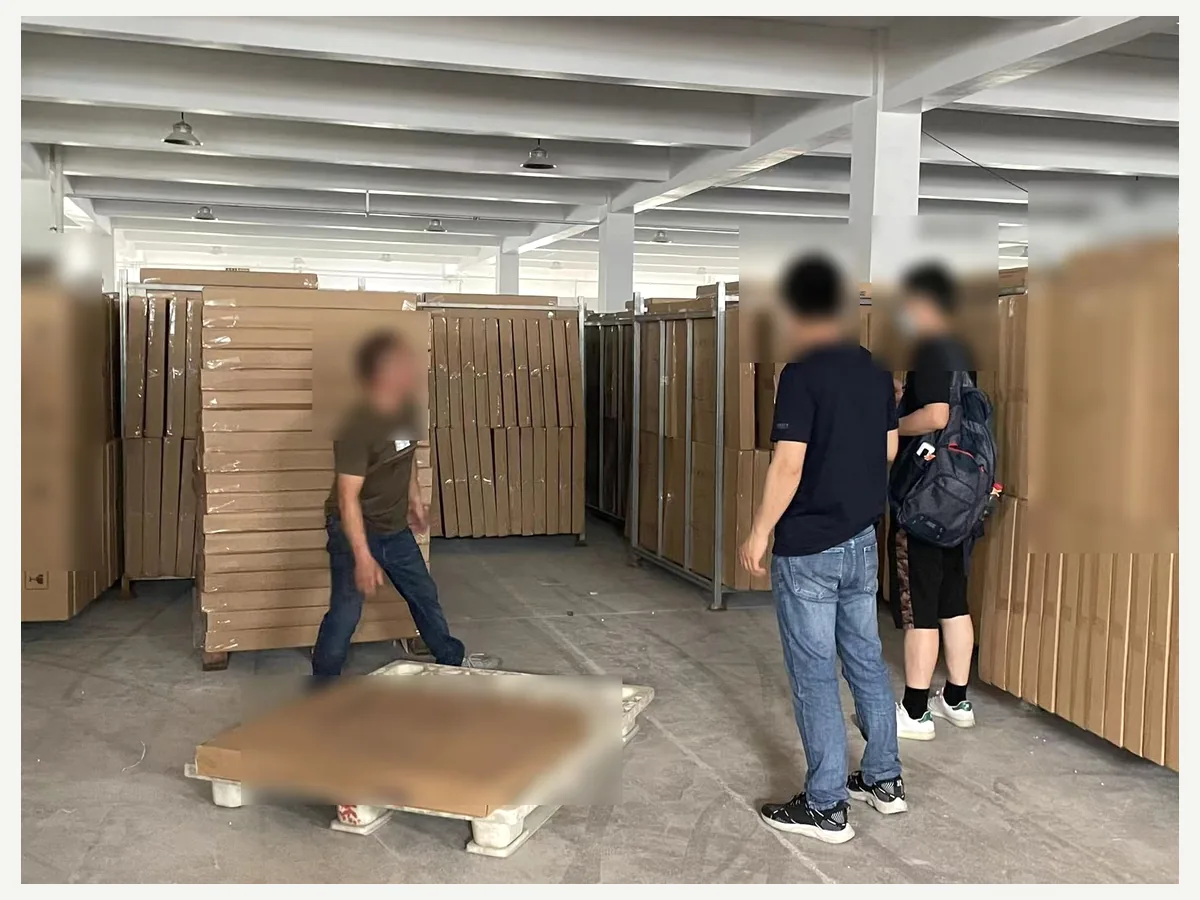
1. Confirm the Approved Specification Before Inspection
Before inspecting the finished goods, the buyer and supplier should have a clearly confirmed specification sheet.
Depending on the model, the specification should include:
- Product model
- Open dimensions
- Folded dimensions
- Tabletop thickness
- HDPE tabletop color and finish
- Steel tube diameter and wall thickness
- Frame coating and color
- Net weight and gross weight
- Folding and locking structure
- Carry handle
- Packaging method
- Labels, manuals and shipping marks
- Container-loading quantity
The inspection should compare the finished product with the approved specification, sample or purchase order. A table should not be judged only by appearance because two visually similar models may use different tabletop thicknesses, steel tubes or internal structures.
For example, MANXI’s 6FT fold-in-half table range includes different configurations for buyers who prioritize strength, product weight or container-loading efficiency.
Buyers can review the complete comparison here:
Compare the MX-BF180 6FT Fold-in-Half Table Series
2. Check the Overall Appearance
The first inspection step is a general visual check.
The tabletop should be reviewed for:
- Consistent color
- Clean surface
- Uniform texture
- Excessive scratches or marks
- Dents or deformation
- Flash around molded edges
- Uneven seams
- Contamination inside the plastic
- Sharp edges
- Incorrect logo placement
Small appearance tolerances should be agreed before production. Buyers supplying supermarkets, event-rental companies or online retailers may have different requirements for scratches, color variation and packaging presentation.
The tabletop should also sit evenly when the table is fully opened. Visible twisting or deformation may affect stability and customer satisfaction.
3. Verify the Product Dimensions
Product dimensions should be checked against the approved specification rather than relying only on the catalog.
The main measurements normally include:
- Overall length
- Overall width
- Overall height
- Folded length and width
- Tabletop thickness
- Distance between the legs
- Steel tube diameter
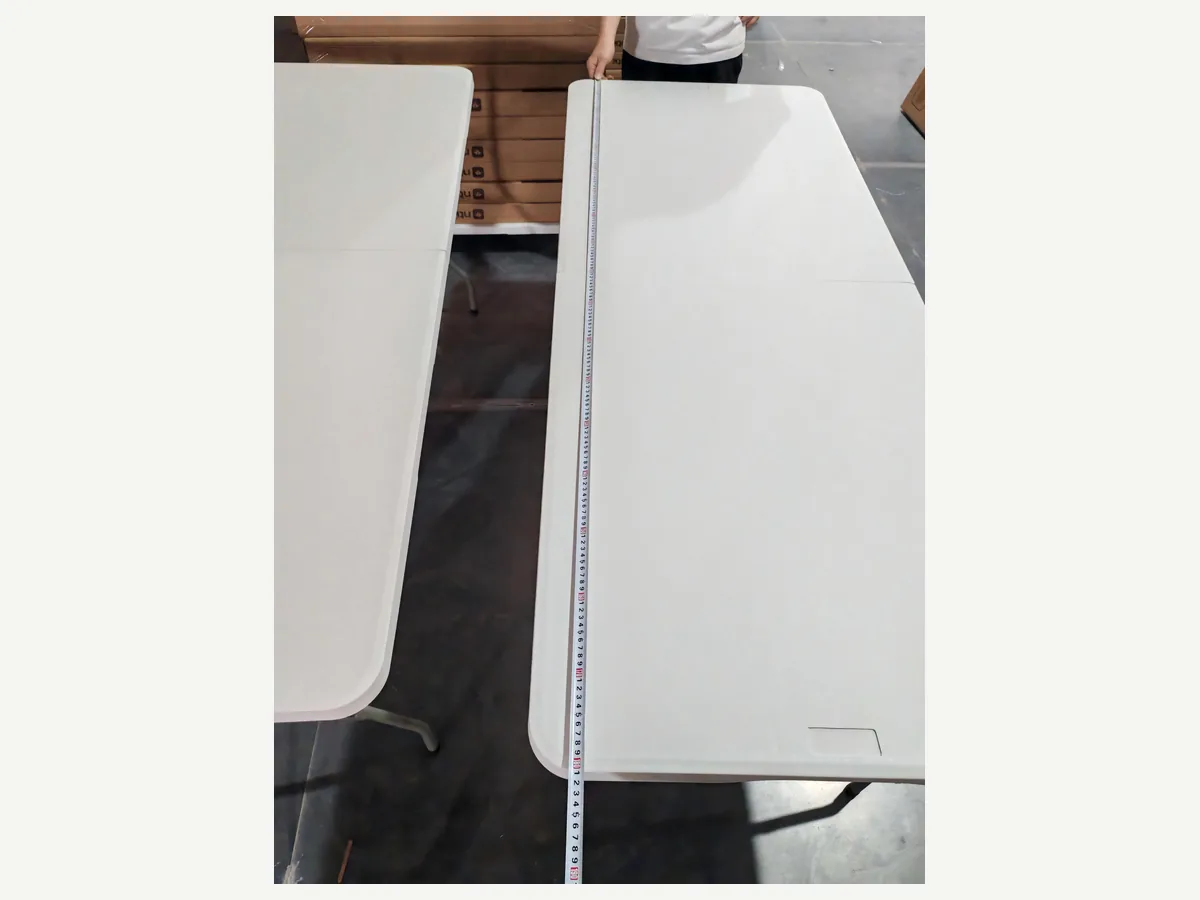

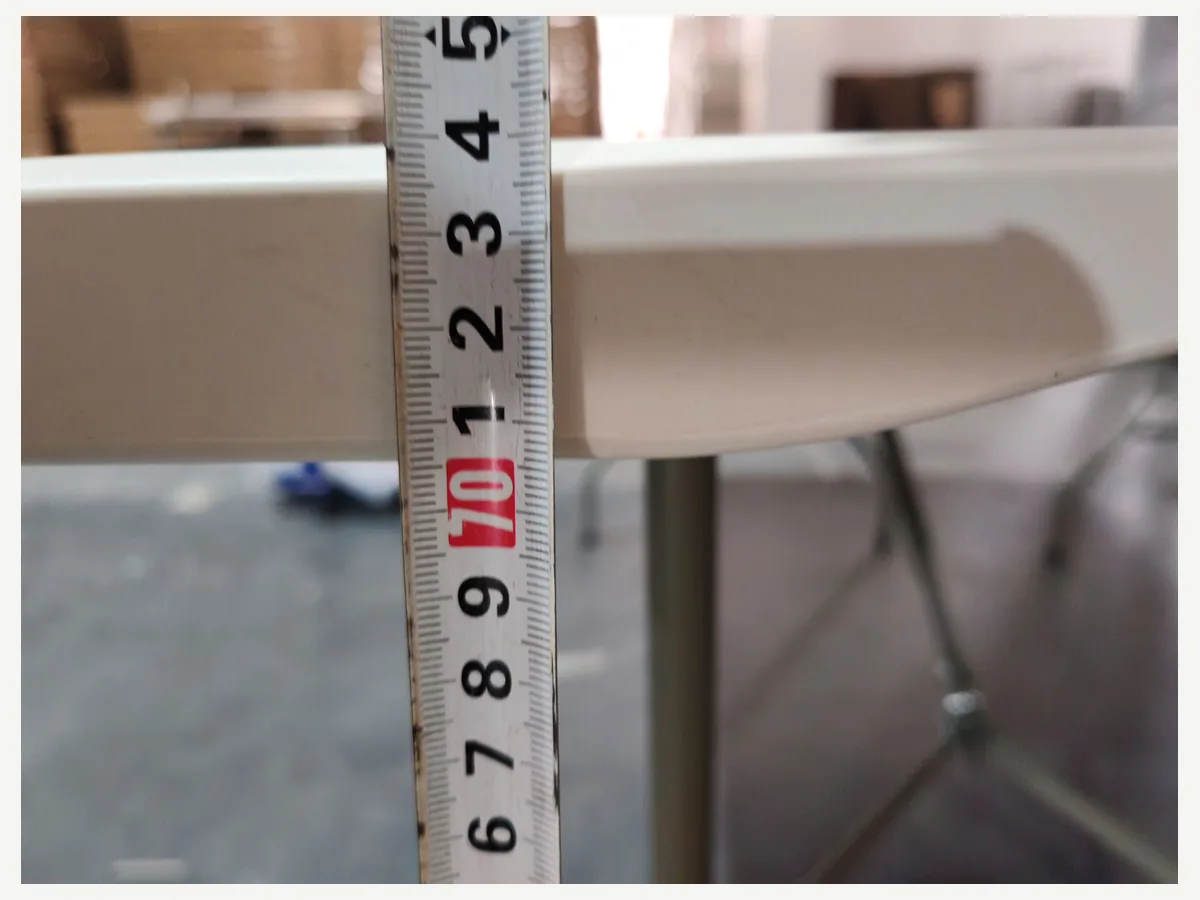
When measuring a finished table, place it on a reasonably flat surface and make sure the frame is fully opened. Measurements taken while the table is partly folded may not represent the actual product size.
The buyer and supplier should also agree on reasonable dimensional tolerances before mass production.
4. Check the Tabletop and Molded Structure
Center hinges and carrying-case features apply to fold-in-half models such as MX-BF180-C. The MX-FT180 one-piece-top table has folding legs but no center-folding tabletop joint.
The tabletop is one of the main components affecting the table’s appearance, weight and performance.
Inspection points include:
- Tabletop thickness
- Uniform molded surface
- Edge shape
- Center folding joint
- Internal reinforcement structure
- Hinge installation
- Carry-handle position
- Alignment of the two tabletop halves
A thicker tabletop does not automatically mean that every aspect of the table is stronger. Product performance also depends on the HDPE material, internal structure, frame configuration, hinges and locks.
Buyers should therefore evaluate the complete product rather than comparing only one specification.
5. Inspect the Steel Frame and Leg Tubes
The frame should be checked carefully because differences in tube size, wall thickness, welding and coating may not be obvious in catalog photographs.
Important points include:
- Tube diameter
- Tube wall thickness
- Frame shape
- Weld position and consistency
- Powder-coating coverage
- Scratches or exposed metal
- Rust or contamination
- Leg alignment
- Foot caps
- Loose rivets, screws or fasteners

Welded areas should be reasonably smooth and consistent. Powder coating should cover the visible metal surfaces without major peeling, exposed areas or excessive color differences.
Foot caps should be fitted securely and should not fall off easily during normal handling.
6. Test the Folding and Locking Mechanism
A fold-in-half table should open and close smoothly without excessive force.
The inspector should check:
- Opening and folding operation
- Center hinge movement
- Table-leg movement
- Safety locks
- Frame locking rings or clips
- Carry handle
- Latches used to hold the folded table closed
- Pinch points
- Unusual noise or resistance
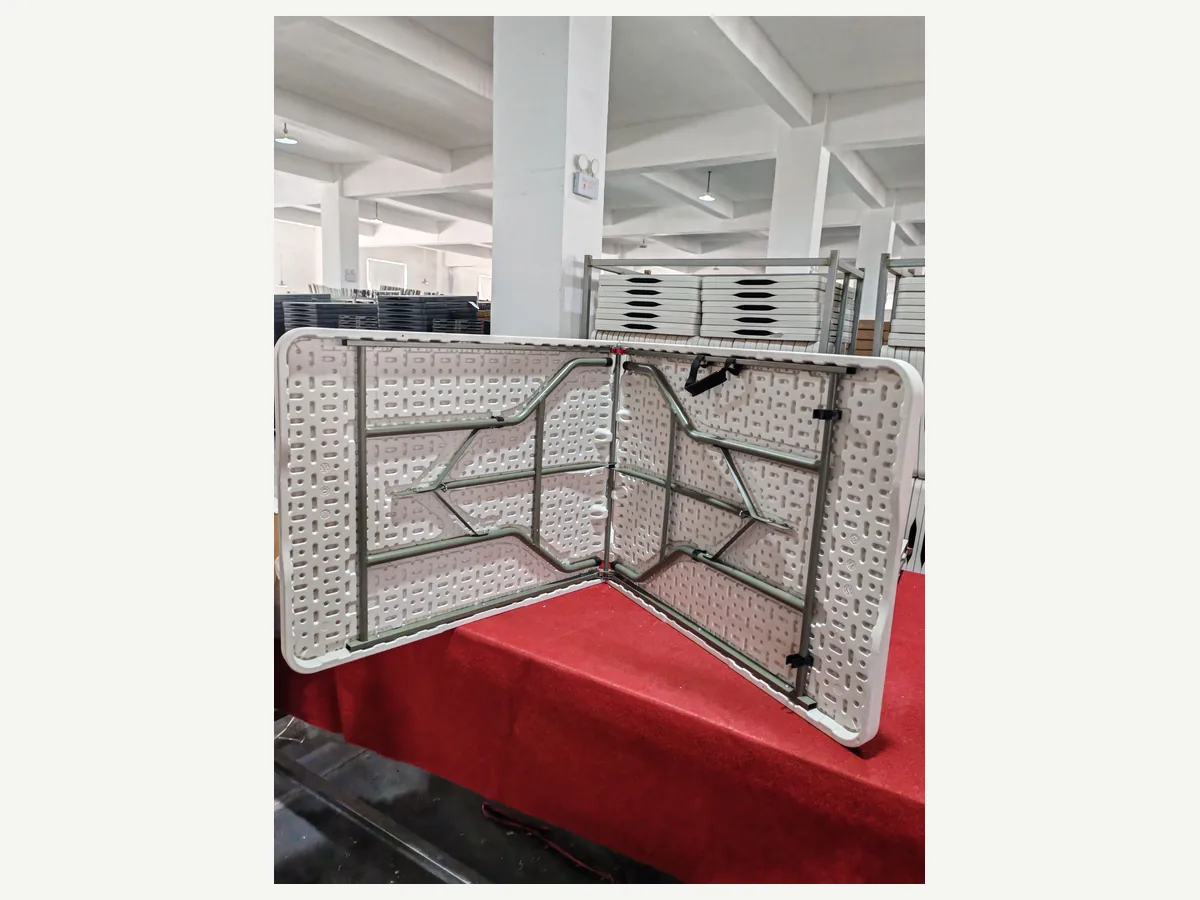
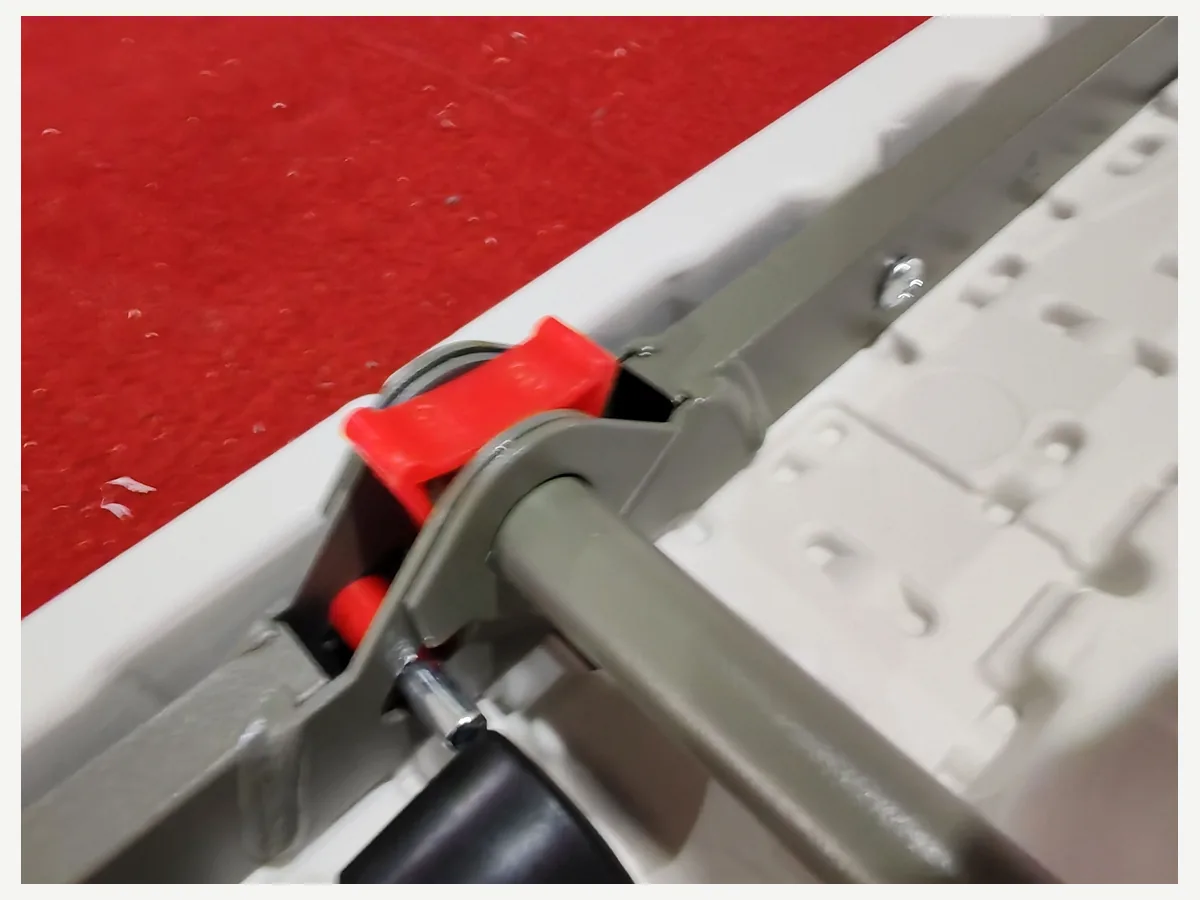
The table should be opened and folded several times during inspection. This can reveal loose fittings, poor alignment or a mechanism that becomes difficult to operate.
After opening, confirm that the legs and tabletop are fully locked before conducting stability or load checks.
7. Check Stability and Basic Function
Place the table on a flat surface and check whether all feet contact the ground.
The table should be reviewed for:
- Excessive wobbling
- Uneven legs
- Tabletop movement
- Loose frame components
- Center-joint movement
- Deformation after opening
- Failure of the locks
A reasonable amount of movement can depend on the product design, but severe rocking or a visibly uneven frame should be investigated.
8. Conduct Load Testing According to an Agreed Method
Load testing should follow an agreed procedure. The test method, load, duration and acceptance criteria should be confirmed before inspection.
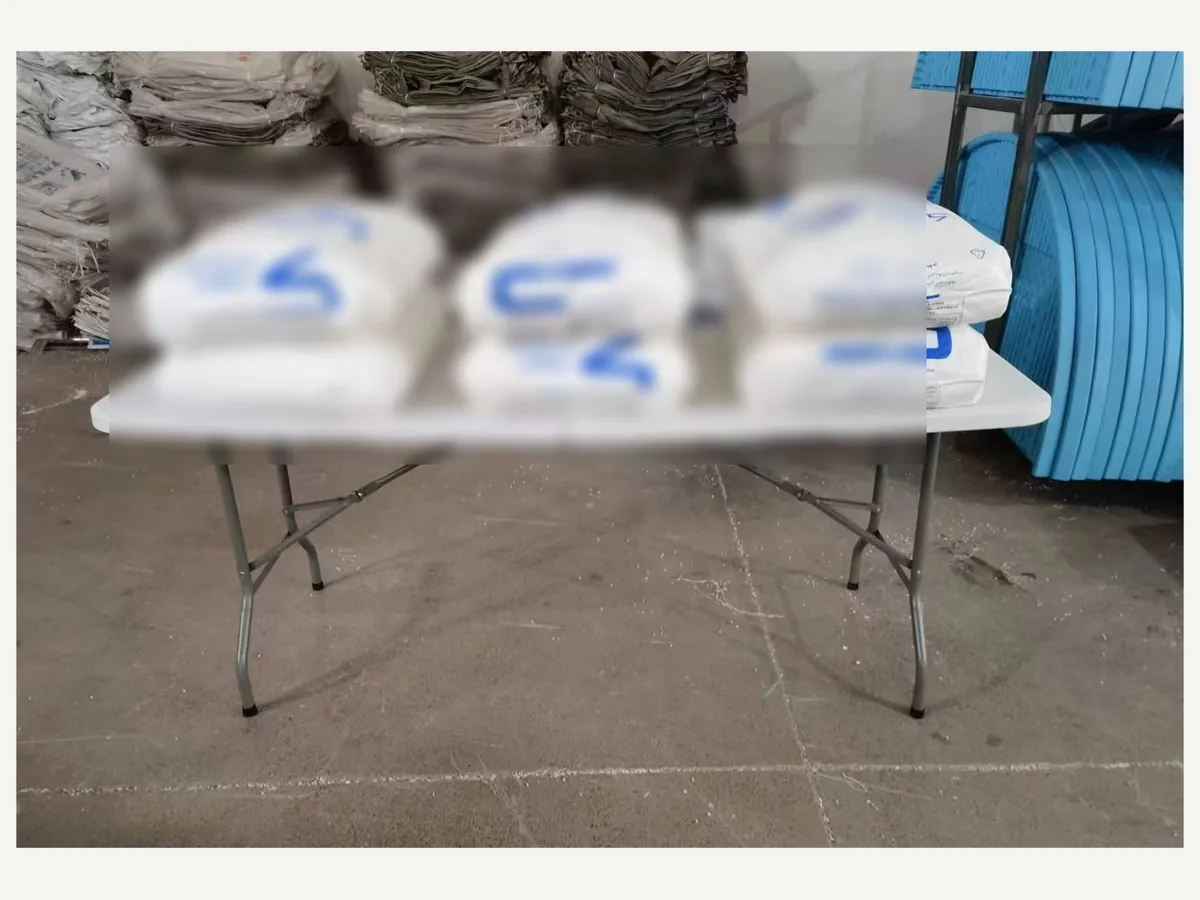
The inspection should record:
- Test weight
- How the weight was distributed
- Test duration
- Condition of the tabletop
- Condition of the frame
- Condition of the hinges and locks
- Any permanent deformation after testing
A randomly selected test method should not be used to claim a formal load capacity. If a certified load rating is required, the buyer should request testing according to the relevant market or laboratory standard.
9. Verify Net Weight
Net weight is useful for confirming whether the finished configuration is reasonably consistent with the agreed model.
Unexpected weight differences may indicate changes involving:
- Tabletop construction
- Steel tube specification
- Hardware
- Internal reinforcement
- Accessories
The scale should be placed on a level surface and checked before weighing. The agreed tolerance should be documented in the inspection criteria.
10. Review Packaging and Labels
Good product quality can still be damaged by unsuitable packaging.
Packaging inspection should cover:
- Polybag or protective layer
- Carton condition
- Carton strength
- Product movement inside the carton
- Protection around corners and metal parts
- Quantity per carton
- Label content
- Model number
- Barcode
- Country-of-origin marking, when required
- Shipping marks
- Instruction manual
- Customer artwork
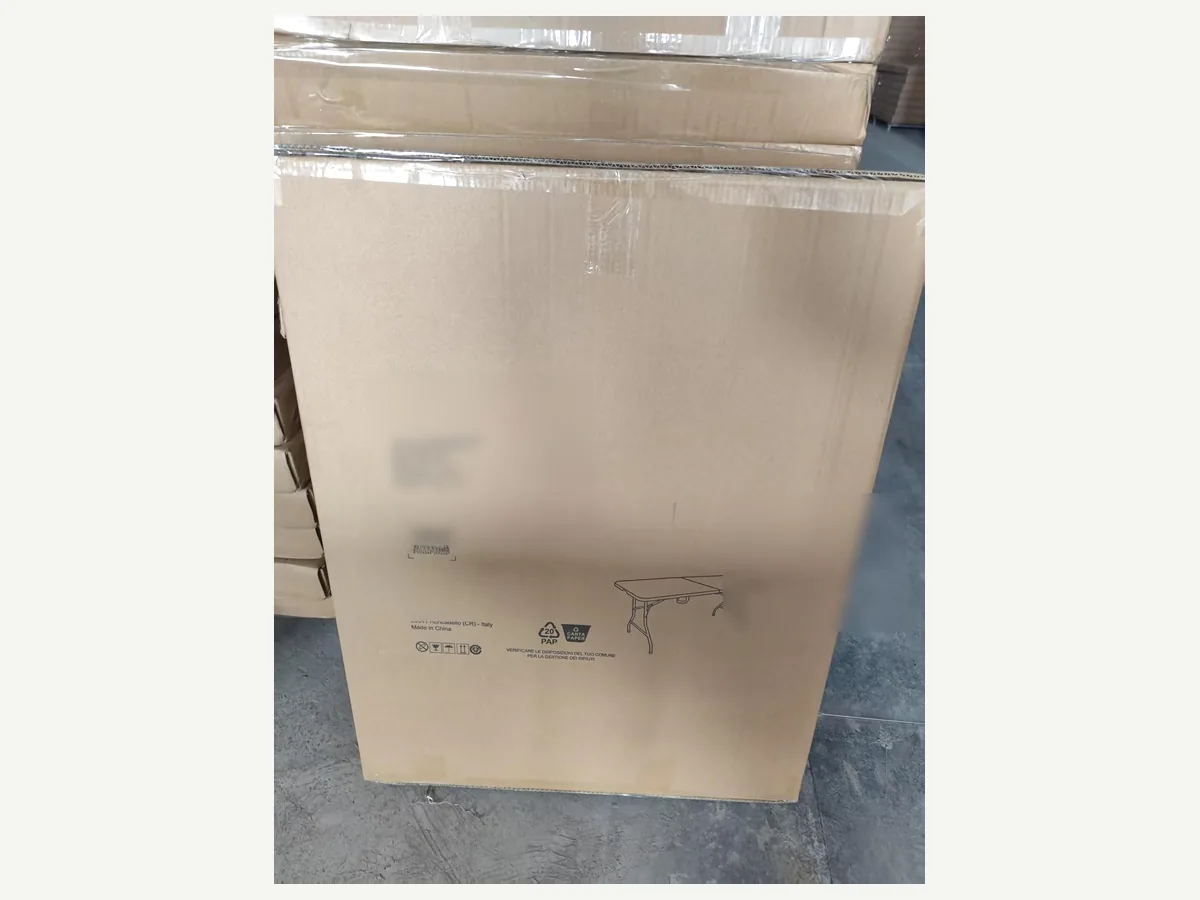
For e-commerce customers, carton protection can be especially important because individual products may pass through several distribution points before reaching the final customer.
Any customer names, order numbers or confidential shipping marks should be hidden before inspection photographs are published online.
11. Check the Production Batch
Inspection should not be limited to one prepared display sample.
The inspector should select products from different positions in the finished batch and compare:
- Color
- Dimensions
- Weight
- Folding operation
- Frame alignment
- Packaging
- Labels
- Workmanship
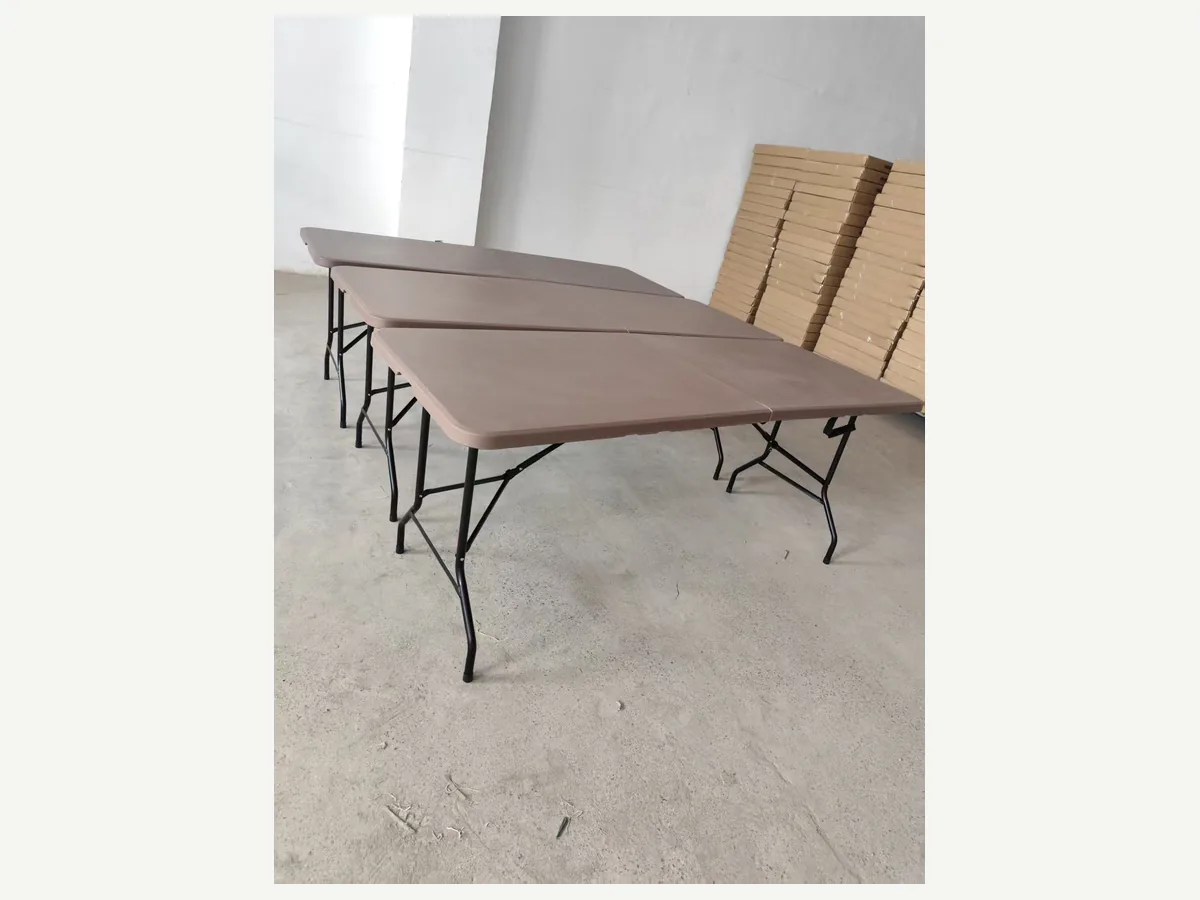
If an AQL inspection is requested, the sampling level, defect classification and acceptance limits should be confirmed before the inspection.
Typical findings may be classified as:
- Critical defects
- Major defects
- Minor defects
The exact classification should depend on the agreed product requirements and intended market.
12. Confirm Container Loading
Before loading, check that the container is reasonably clean, dry and free from visible damage that could affect the goods.
The loading record should confirm:
- Total carton or product quantity
- Product model
- Loading arrangement
- Container number
- Seal number
- Condition of cartons during loading
- Remaining space
- Final closed-container condition
Loading quantities shown in a catalog are normally reference figures. Final container quantity depends on the confirmed product, packaging dimensions and loading method.
A Practical Inspection Checklist
Before approving shipment, confirm the following:
- The product matches the approved model.
- Open and folded dimensions have been checked.
- Tabletop color and appearance are acceptable.
- Tabletop thickness matches the specification.
- Steel tube and frame construction are correct.
- Welds, coating and foot caps are acceptable.
- Folding parts move correctly.
- Locks operate securely.
- The table stands evenly.
- Load testing follows the agreed procedure.
- Net weight is within the agreed tolerance.
- Packaging and labels are correct.
- Batch sampling has been completed.
- Loading quantity and container condition are recorded.
Final Thoughts
A useful folding-table inspection is based on agreed specifications, measurable requirements and representative batch sampling. It should help the buyer confirm what has been produced—not simply create a collection of photographs.
MANXI supports product specification confirmation, production follow-up, packaging review and pre-shipment inspection according to the agreed order requirements.
To discuss a folding-table project, include your target model, quantity, destination, packaging requirements and quality level.
Explore MANXI HDPE Folding Tables
Explore our quality-control process. Photos are selected configuration records, not proof of a certified load rating.